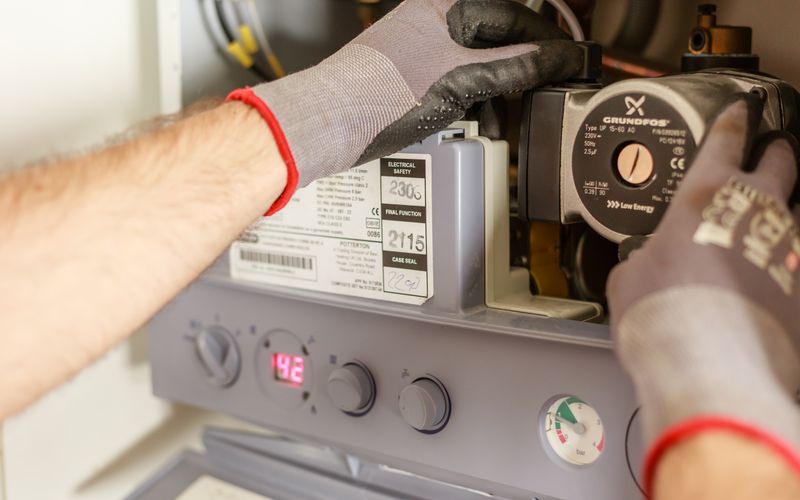
Signs your water heater needs attention
- No hot water, or hot water that runs out far sooner than it used to
- Water pooling around the base of the tank
- Rumbling or popping from inside the tank
- Rusty or cloudy hot water
- A gas pilot that will not stay lit, or a breaker that keeps tripping
How we handle it
- Diagnose the unit
We check the thermostat, element or burner, thermocouple, gas or power supply, and the tank itself.
- Repair where it makes sense
Thermostats, elements, thermocouples, valves and connections are usually a same-visit repair.
- Replace when the tank has gone
A tank leaking from the body cannot be repaired. We size and install a new unit and haul the old one away.
- Finish to code
Correct relief valve discharge line, expansion tank, venting and drain pan as required, then test.
What our water does to heaters here
San Antonio water is hard, so minerals settle to the bottom of the tank as sediment. That sediment is what makes a heater rumble, and it wastes gas or electricity because the burner has to heat through the layer. Left alone it shortens the life of the tank, which is why a yearly flush matters more here than in soft-water cities. Many local heaters also sit in the garage or attic, where a slow leak goes unnoticed until a ceiling stains.
Tank, tankless, gas and electric
We work on the hot water heaters San Antonio homes actually have: 40 and 50 gallon gas and electric tanks in garages, attics and closets, and tankless units. Typical repairs are thermostats and heating elements on electric tanks; thermocouples, gas valves and burners on gas tanks; relief valves, supply connections, drain valves and thermal expansion tanks. For tankless units, see tankless water heaters.
Maintenance that makes a heater last here
A yearly flush clears the sediment our hard water leaves in the tank, and checking the anode rod and relief valve catches trouble before it becomes a leak in the garage or attic. See what a water heater maintenance visit covers.
What it costs
It depends on what the problem turns out to be, so we diagnose first. Your plumber then gives you an upfront price for the work, and you approve it before anything starts.
Questions people ask
Repair or replace?
If the tank body is leaking, replace it. If the problem is a control, element, thermocouple or valve, repair is usually the sensible choice. We tell you which one you are looking at before any work starts.
How long should a water heater last?
Tank heaters commonly last around 8–12 years, less if they are never flushed. Tankless units last longer but need descaling in hard water.
Can you install a tankless heater?
Yes. Tankless needs the right gas supply and venting, so we check what your house can support and give you the price before we begin.
Can you fix it the same day?
Most control, element, thermocouple and valve repairs are done on the first visit. If the tank has to be replaced, we tell you when the new unit can go in before you decide.
Why is the relief valve on my heater dripping?
Usually pressure, not a bad valve. When the thermal expansion tank has failed or the house pressure is too high, the relief valve does its job and lets water out. We test the pressure and the expansion tank before replacing anything.