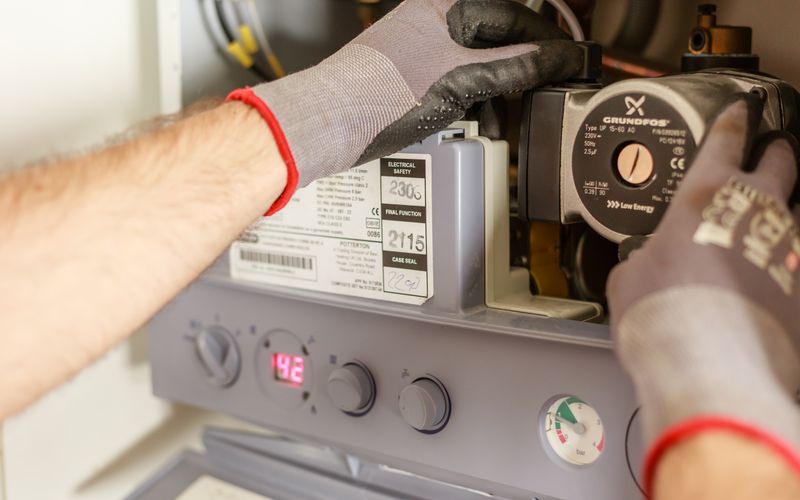
What we do with tankless units
- New installations, including converting from a tank
- Descaling and annual maintenance
- Error codes and ignition faults
- Flow and temperature problems
- Gas supply and venting corrections
How we handle it
- Check what the house can support
Gas line capacity, venting route and water hardness decide what will actually work.
- Size it to your use
Sizing is about flow rate and how many fixtures run at once, not just house size.
- Install to code
Correct gas sizing, venting, condensate handling and isolation valves for future servicing.
- Set up maintenance
Descaling matters in San Antonio — we set the interval and show you the isolation valves.
Hard water and tankless in this city
Scale is the main enemy of a tankless heater here. It builds in the heat exchanger, drops efficiency and eventually triggers error codes. Units installed with isolation valves can be descaled quickly; units installed without them cost far more to service, which is why we fit them as standard.
What it costs
It depends on what the job turns out to need, so we diagnose first. Your plumber then gives you an upfront price, and you approve it before anything starts.
Questions people ask
Is tankless worth it in San Antonio?
It can be, if the gas supply and venting suit the house and you are prepared to descale it. If not, a well-installed tank is the better buy — we will tell you which applies to your home.
How often does it need descaling?
In hard water, plan on it yearly. The manufacturer schedule is the minimum, and our water is harder than the assumption behind it.
Can you replace my tank with a tankless?
Usually yes, but it often needs gas and venting work. We price that honestly up front rather than discovering it mid-job.