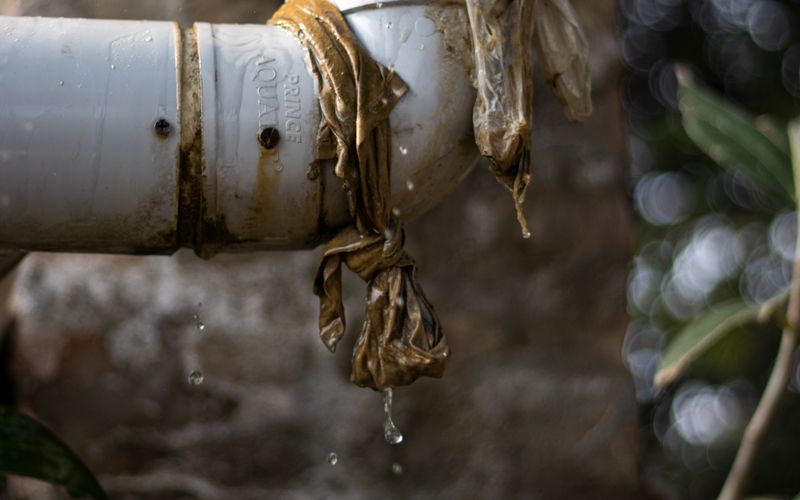
Signs your pressure is wrong
- Weak flow in the shower, or worse when another tap runs
- Pressure that dropped suddenly across the whole house
- Banging or hammering pipes when a tap or valve shuts
- The water heater relief valve dripping
- Toilet fill valves and tap washers failing again and again
How we handle it
- Measure it
A gauge on a hose bib gives the static pressure and what happens when the water heater runs. That number decides everything else.
- Find the cause
Low pressure can be a failing PRV, a partly closed valve, scaled fixtures or a hidden leak. High pressure is usually the PRV or a failed expansion tank.
- Repair or replace
We rebuild or replace the pressure reducing valve, clear or replace scaled parts, and fix what is leaking.
- Set and re-test
The PRV is set to a sensible working pressure and the system is tested again, including the relief valve on the heater.
Why pressure is a San Antonio problem
Street pressure varies a lot across the city and is high in many areas, so most homes have a pressure reducing valve at or near the meter. Those valves have a service life and fail slowly, which is why pressure creeps up or falls away over months rather than overnight. Hard water is the other half of the story: scale narrows aerators, cartridges and old galvanized pipe until the flow at the fixture drops even though the pressure at the meter is fine.
Low pressure everywhere, or just one tap?
One fixture is almost always a blocked aerator or cartridge — a small fixture repair. The whole house dropping is the PRV, a main valve, corroded galvanized pipe, or a leak on the water line. If the meter moves with everything off, find the leak first: see leak detection.
High pressure costs you later
Above about 80 psi, codes require it to be reduced, and for good reason: high pressure shortens the life of the water heater, fittings, toilet fill valves and appliance hoses, and it is behind a lot of the burst hoses we get called to. A working PRV and a healthy expansion tank keep it in range.
What it costs
It depends on what the job turns out to need, so we diagnose first. Your plumber then gives you an upfront price, and you approve it before anything starts.
Questions people ask
What pressure should my house be at?
Most homes sit comfortably between 50 and 70 psi. Above 80 psi it needs reducing, and much below 40 psi you will notice it in the shower.
Why did my pressure drop overnight?
A partly closed main valve, a failed PRV, or a leak on the supply line. The meter test tells us quickly which one it is.
Can high pressure really burst a pipe?
It rarely bursts sound pipe on its own, but it wears fittings, hoses and valves until one of them lets go — often a washing machine hose or a water heater connection.